Search This Blog

Showing posts with label patrols. Show all posts

Tuesday, 22 June 2010

A step too far for police patrols?


The above is a screen shot of a google map of central London showing in real time the locations of underground trains. You can actually see them move and by clicking on them more information is available. The link is here. I thank John Lahr, a former work colleague for drawing it to my attention.

It occurred to me that a similar website of uniform police vehicle locations and movements is also possible. Police vehicles have mobile data terminals that transmit GPS signals every 15 seconds. I have some of the data that I have plotted for Camden Borough.
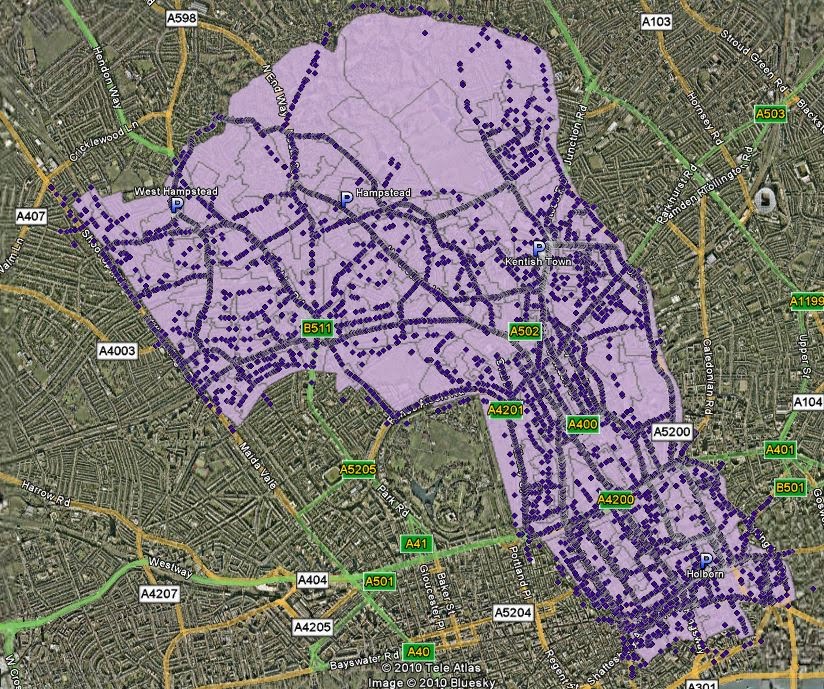

This map shows all the locations for a 24 hour period on Saturday 20th March 2010.


The above three maps show the hours of 21, 22, 23 00 hours, some of the busiest times in the week. It may surprise people how little cover there is.

What is not being shown is foot patrols. GPS signals are transmitted from foot patrolling officers personal radios but not stored so I have no access to that data. But it is feasible to plot both vehicle and foot patrols in real time.

Before you cynical people send me to an institution for the criminally naive on the basis that this would give the offenders all the information they need to commit crime undetected let us examine the facts. What is the purpose of police officers patrolling in uniform, often with high visibility jackets, and in livery vehicles with flashing lights and sirens? It is of course to be seen. The purpose of overt policing is to to be identifiable, to prevent crime, to reassure and to engage with the public. There is of course a role too for covert policing. 

The more I think about it the more sensible it becomes.............................................................


Tuesday, 2 February 2010

Single patrols and fear of crime

Copyright Evening Standard

The Metropolitan Police Service latest advertising campaign is about foot patrols - "walking is working" - a double meaning positive message reminiscent of negative message "Labour is not Working" that started the Saatchi fortune back in 1979. The posters for campaign were the subject of a previous post.

Apparently there is a protest on Facebook led by Police Community Support Officers and some Police Officers against single patrols. On the basis, as far as I can see, that patrolling on your own is by its nature unsafe. Here is the story in the Evening Standard.

This is where I am going to swing the lamp and start talking personally. In my police career I have worked in some of the thought to be more dangerous places in London -for instance Hackney Borough and those thought to be less dangerous - for instance Hillingdon Borough and a lot of the time I patrolled on my own. I am a supporter of single patrols with a number of provisos.

Firstly why am I a supporter of single foot patrols? The reasons are quite complex and I do not have the time to spell them out in detail here but can be summed up by saying that it makes young inexperienced officers stand on their own two feet and interact with the public on their own without having a safety net of a colleague. Patrol becomes a more community interactive exercise where personal tactics and strategies to detect and prevent crime, and solving problems are devised. Patrolling in pairs can become a stroll with a friend.

What are the provisos? The major proviso is that there must be enough other police officers available to come to the aid of a single patrolling officer when s/he needs help. As a supervisor I would more likely double people up if we were short on parade than if we had the full crew for that reason. That means not dispensing with response vehicles to allow more single foot patrols.

The second proviso is the training, skills, expectations and physical fitness of those employed by the police. Policing, especially police patrols, by its nature is not suited to everyone. It could be argued that people who in their personal lives would never consider walking in their own neighbourhood after dark on their own are not suited to police patrol work. Unfortunately such people are employed by the police for patrol work, so it is not surprising if they expect to be accompanied in their patrols.

My last point is one of perception and fear of crime. It comes back to a conversation I had with an American police officer who wanted to convince residents of a housing estate in a city in the United States that he policed that the crime levels had fallen sufficiently for them to have a lower fear of crime and start frequenting and enjoying the communal places on the estate. I said "Do your officers patrol the estate on their own, or only in numbers?" He said "I patrol it on my own but the other officers refuse to." I said "You cannot expect the residents to think the estate is safe, if your officers do not think so. Police have to take the lead, when resident see single patrols they might start believing you."

Wednesday, 20 January 2010

Foot patrol, sorry walking, is the solution...........apparently


The Metropolitan Police Service has launched a new press campaign today with posters and radio adverts stating that foot patrols are the way in which it tackles burglaries, drug problems and other problems of concern to local communities. You can learn more here. This has quote from the new Assistant Commissioner Ian Mcpherson head of Safer Neighbourhoods ion the MPS.
I was part of a small steering group chaired by Ian Mcpherson about three or four years ago that helped produce ACPO drugs guidance for police working in schools and colleges. See here. This I think is his third or forth job since then, a man in demand and I can understand why having worked with him.

Monday, 14 December 2009

Policing Pledge

These are the two little clips advertising the Policing Pledge. Within the PP there are commitments about crime maps but the Metropolitan Police choose to emphasise their commitment to responding to calls, neighbourhood patrols and supporting victims of crime in their literature.